2 Min read
On leadership
On rhetoric
1 Book rec – what a combat veteran reads
1 restaurant rec
Toolbox, ages 9 to 99
*
*
The four-word rule flummoxed me.
First, let me frame the story. TJ met with my husband and me during our trip to see my son, who’s stationed at Fort Carson in Colorado Springs. TJ spent a career in the US Army with a dozen or so combat deployments. We had a leisurely lunch at a rooftop restaurant* with views of the Front Range of the Rockies.
True to the quiet intensity I learned about before our meeting, TJ arrived early to secure the best seats by the window, his beer glass half full when we got there at noon. His hair and scruffy beard were silver-gray against his ruddy skin. My husband had roomed with him when they were cadets and said he slept with his eyes open, not a bad trait for an infantryman.
During our lunch, TJ mentioned his ten rules and how he changed out and updated one after reading mountain climber Alison Levine’s book, On the Edge. ** This intrigued me.
Here was this battle-hardened veteran reading Levine’s book and updating his personal commandments. What were these rules anyway and would he share them?
As they continued to talk about friends, deployments, and Iran, I was anxious to know. I hadn’t known TJ well, only through my husband. Four hours was a good amount of time to find a space in the conversation to ask. I’m not sure I will share them all– I’d like to live out my days.
*
Let’s say they’re not all what you might think they are.
As an example, one is, always carry a knife. By the way, I followed this rule for much of my life until TSA confiscated more knives than I was willing to give up. I’ll have to rethink my habits. I do keep a knife handy, however.
The four-word rule, from a man who’s led teams of soldiers to tens of thousands: Give credit; take blame.
Love these four words and shared them with my children the next day.
*
Give credit; take blame.
If only all leaders would subscribe to such a rule. TJ expounded a bit about the soldier’s job and this duty or that, then the role of the leader. When you win, give credit to those who made it happen. When you lose, take the blame for where you failed to ensure success.
The parallel construction condensed to dual imperatives of just two words each has staying power. The first clause–give credit– goes against the soldier’s inclination towards glory, that ingrained and ancient motivator. Give that away and bestow credit on others.
Meanwhile, do the opposite of the natural tendency to shift blame and target others — instead take the blame. Easy enough to memorize and hard enough to put into practice. The opposing meanings of give and take, of credit and blame, and the balanced construction pack a potent rhetorical punch. ***
TJ’s four words have been rattling around in my head since that lunch. Give credit; take blame.
*
*
On the topic of rules and leadership, take a moment to check out my upcoming memoir Raising Athena. If leadership and legacy of service of a mother and daughter sounds like your kind of read, please enter below.
ENTER THE GOODREADS GIVEWAY and a chance to win 100 free eBooks of Raising Athena. Open now through launch date in less than two weeks on April 21. Enter below — and if you know someone who’d love this story, pass it on.
*
Goodreads Book Giveaway
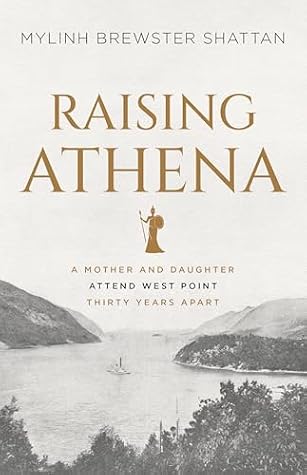
Raising Athena
by Mylinh Brewster Shattan
Giveaway ends April 22, 2026.
See the giveaway details at Goodreads.
*
Raising Athena
For readers of Crying in H Mart, Hillbilly Elegy, and Grit — a memoir about a new military tradition passed from mother to daughter.
Why now? 2026 marks fifty years of women at West Point, America’s 250th birthday, and five decades since Saigon’s fall. Raising Athena offers a rare look inside the Academy — what it really takes for women, then and now.
From the last helicopter out of Saigon to Beast Barracks, Raising Athena traces what compels a woman — and then her daughter — to answer the call. As I watched my daughter follow in my footsteps, I searched for answers.
- Why does anyone join the military?
- What’s changed for women in the past three decades?
- What hasn’t?
Weaving together history, philosophy, and intimate personal narrative — from Homer to Thich Nhat Hanh — this memoir speaks to every reader who has wrestled with fear, guilt, and meaning.
*
“Lucid prose and thoughtful, experience-driven analysis.” — IndieReader, 4.7 stars ✦ IR Approved
*
*
FOOTNOTES
*ViewHouse in Colorado Springs–there are several locations in Colorado. Spacious and fresh farm-to-table food. I had the pork belly tacos which were delicious. The ceasar salad was good and they make their own dressing.
**Alison Levine’s On the Edge: Leadership Lessons from Mount Everest and Other Extreme Environments. Grand Central Publshing, 2014. “One of the world’s greatest mountain climbers and adventurers tells her firsthand leadership stories of coming to grips to life literally on the edge—8000 meters up.“
*** Rhetorical devices at work (Source: Claude AI) in TJ’s rule:
Give credit; take blame.
Asyndeton — the semicolon replaces and or but, creating compression and speed. The pause is heavier than a comma, lighter than a period. It snaps.
Antithesis — give/take and credit/blame are opposing concepts held in deliberate balance. This is the classical engine of the phrase.
Parallelism — identical grammatical structure: [verb] + [noun], [verb] + [noun]. The form mirrors the balance of the meaning.
Chiasmus (near) — give and take are inverse actions; credit and blame are inverse valuations. The phrase almost folds back on itself.
Imperative mood — commands, not suggestions. No subject, no hedge. The brevity is authoritative.
Parataxis — two clauses of equal weight, neither subordinate to the other. Democratic construction for a democratic principle.
*
Please stay up to date on the RAISING ATHENA book page and events page, for upcoming podcasts, talks, and engagements.
*

*

0 Comments